Want To Stay Up-To-Date On The Latest 340B News?
"*" indicates required fields
Posted on August 6, 2026 |
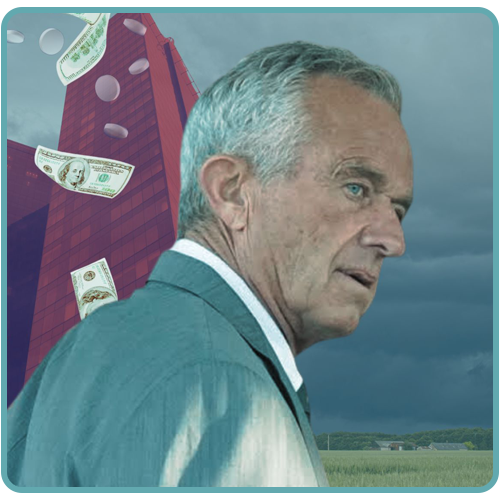 On Monday morning, buried in the Federal Register, Robert F. Kennedy Jr.'s health agency handed Big Pharma the prize it has chased for years: a revived and expanded 340B rebate scheme that lets drug companies stop discounting medicines for safety-net hospitals up front and force those hospitals to chase their own money instead.
A federal court blocked the first version of this pilot. Secretary Kennedy's answer was not to back down. It was to double down: from 10 drugs and 8 manufacturers to roughly 25 products from 13 manufacturers, effective January 1, 2027.
Here is what changes. For more than 30 years, the 340B Drug Discount program has required drugmakers to sell outpatient drugs to rural and safety-net providers at a discount, right at the point of purchase. Under Kennedy's pilot, that requirement ends for the covered drugs. America's rural hospitals will now pay full sticker price up front, hand over its claims data to Big Pharma’s artificial intelligence agents and then wait for Big Pharma to send the money back.
Read that again. Nonprofit hospitals running on margins measured in pennies will be forced to float interest-free loans to the most profitable industry in America. The drug company holds the cash. The safety net holds an IOU. Every day a manufacturer sits on that rebate is a day of free money, financed by a nonprofit hospital that cannot afford it.
Big Pharma could not win this on its own. Just two weeks ago, the federal D.C. Circuit Court told Novartis, Eli Lilly and Bristol Myers Squibb they may not switch to rebates without government approval. The drug companies lost in court. So they went shopping for a Secretary instead. Kennedy delivered and submissively bent his knee.
Who exactly needs this loan? Johnson & Johnson, maker of Stelara and Xarelto, paid its CEO $32.6 million last year. AbbVie paid its CEO $32.5 million. Pfizer paid its CEO $27.6 million. Thirteen of the wealthiest corporations on earth, sitting on tens of billions of dollars in annual profits, will now enjoy involuntary financing from the charity hospitals of rural America.
Adding insult to injury, HRSA's own notice estimates the scheme will cost covered entities $523 million a year to administer, roughly $34,320 per provider. That is not a rounding error. In a critical access hospital, that is a nurse. In a rural clinic, that is real care taken away.
Do not take our word for it. Take Wall Street's. Analysts at Raymond James warned this week that the pilot could squeeze rural, safety-net and smaller providers, the ones with the least cash on hand to front Big Pharma's loans. The American Hospital Association says the government's cost analysis dramatically understates the true costs. Kennedy's agency published the notice anyway.
The political betrayal of President Trump’s voters is even more astounding. Donald Trump carried 93 percent of America's rural counties in 2024, his third straight election above 90 percent. Those counties are 340B country. They are the places where the hospital is the largest employer, where the nearest alternative is an hour away, and where a cash-flow squeeze does not mean a bad quarter. It means a closed maternity ward, a shuttered pharmacy, a hospital that never reopens.
Robert F. Kennedy Jr. came to Washington promising to make America healthy again and to stand up to the drug companies he spent a career attacking. Instead, he has become their puppet. He is not asleep at the switch. This is his agency, his notice, his scheme, built to Big Pharma's specifications and delivered on Big Pharma's timeline.
Big Pharma asked Secretary Kennedy to bend the knee. He did. And the rural Americans who put this administration in office will be handed the bill that they can’t afford to pay.