Want To Stay Up-To-Date On The Latest 340B News?
"*" indicates required fields
Posted on September 14, 2026 |
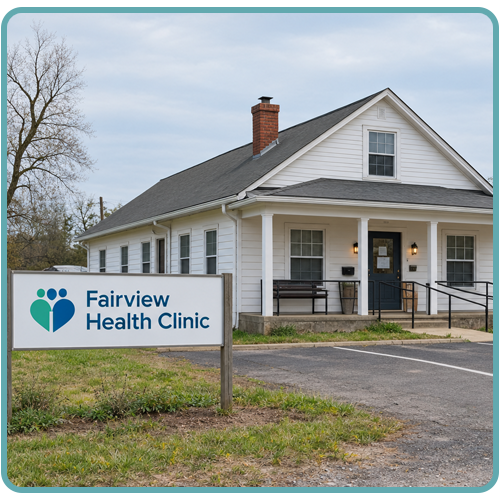 You have probably driven past one without knowing it: a storefront clinic in a strip mall, a converted house on a rural two-lane road, or a mobile van parked outside a school. These are America's community health centers. Last year, they cared for 34.4 million people—roughly one in every ten Americans—across more than 17,400 communities that much of the healthcare system has left behind.
Who walks through their doors? Nine in 10 patients are low-income. More than 6 million are uninsured, representing about one in five uninsured people in the country. They are farmworkers with untreated diabetes, mothers who need asthma inhalers for their children, and veterans who live an hour from the nearest hospital. Community health centers turn none of them away because federal law requires them to serve everyone who comes through their doors, regardless of ability to pay.
They do all of this with limited resources. One of the few tools that makes the math work is the 340B drug discount program.
The program allows health centers to purchase prescription drugs at a discount and reinvest the savings into patient care. Those savings help provide insulin at a fraction of retail cost, fund mobile clinics in counties without pharmacies, support behavioral health counselors, and keep transportation services running for seniors. More than three-quarters of health centers use 340B savings to sustain rural services. Remove those savings, and there is no alternative source of funding. The van stops running. The clinic closes.
Consider what that means for someone like Gina Moore, a Type 1 diabetic who receives care at PrimaryOne Health in Columbus, Ohio. Through the center’s prescription assistance program, funded by 340B savings, she has been able to pick up a 90-day supply of the insulin she cannot live without for less than $15, medicine that would cost more than $1,000 elsewhere. “I need insulin every day,” she said, “and without it my kidneys will shut down. I will die.” Her story is one of millions. This is what these clinics actually do.
The 340B program uses no federal tax dollars, and community health centers account for less than 6% of the program—under $6 billion of roughly $100 billion in annual purchases.
Yet some pharmaceutical companies have a problem with these clinics.
On Sept. 9, Johnson & Johnson, one of the world's largest drugmakers with more than $94 billion in annual pharmaceutical sales, announced that it would extend its 340B restrictions to grantees: community health centers, Ryan White HIV clinics, hemophilia treatment centers—the safety net's safety net.
Johnson & Johnson is not alone, nor is it the first. Genentech has taken similar action. So has Boehringer Ingelheim. Bayer has expanded its claims-data requirements to grantees. AbbVie has restricted grantee pharmacies since last year. For years, even as manufacturers imposed restrictions on hospitals, grantees remained untouched—an unwritten line that no one crossed.
That line is now gone.
Understand what this means. The 340B statute requires drug manufacturers to provide these discounts to eligible health centers. It is part of the agreement for participating in Medicare and Medicaid, taxpayer-funded programs that generate billions in revenue for pharmaceutical companies. Now, they want the benefits of that arrangement without honoring the obligations. They have created data requirements and pharmacy restrictions that are not authorized by the statute and are using them to reclaim discounts from some of the poorest clinics in the country.
Call it what it is: multibillion-dollar corporations reaching into a rural exam room and taking medicine off the shelf. Not to lower patients' costs, but to protect margins that are already among the highest in American business.
Johnson & Johnson can afford to leave community health centers, and the hospitals that serve vulnerable patients, alone. It is choosing not to. Remember that the next time the company says it cares about patients. It doesn't.