Want To Stay Up-To-Date On The Latest 340B News?
"*" indicates required fields
Posted on April 23, 2026 |
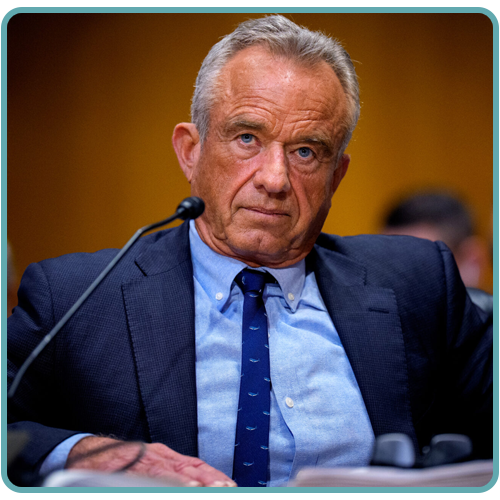 For years, Robert F. Kennedy Jr. has cultivated a carefully curated image as the ultimate outsider. He is the self-styled populist, the man who promises to "Make America Healthy Again" by taking a sledgehammer to the "corrupt" alliances between government agencies and corporate behemoths. He once seemed like someone who had the spine to stand up to the predatory interests of Big Pharma.
But as the old saying goes, "The Swamp is deep, and its currents are strong."
Last week, in his testimony before the House Ways & Means Committee, we witnessed a transformation that was as sudden as it was sickening. The man who promised to be a reformer stood before Congress and delivered a performance that could have been scripted by a pharmaceutical lobbyist in a K Street board room.
What did he say? Secretary Kennedy took aim at the 340B drug discount program—a lifeblood for rural and non-profit hospitals—using the exact same distorted talking points that the drug industry has spent millions on ad campaigns to promote. It wasn’t just a policy disagreement; it was a total surrender. The "reformer" has gone native.
Kennedy’s testimony focused on a "systematic and perverse transfer of wealth," accusing non-profit hospitals of "theft" and claiming they use 340B savings to enrich affluent areas at the expense of the poor. He cited a single, years-old news report about one hospital system to justify an assault on a program that supports over 12,000 providers.
It is the height of irony. Kennedy, a man who built his brand on being a skeptic of "official narratives," has swallowed the most dishonest narrative in Washington: that the problem with drug prices isn’t the multi-billion-dollar companies that set the prices, but rather the local, non-profit clinics that use discounts to keep their doors open.
Let’s be clear about what 340B actually does. It requires pharmaceutical manufacturers—companies that enjoy massive taxpayer-funded research and patent protections—to provide discounts to healthcare providers that serve a disproportionate share of low-income and rural patients. This costs the taxpayers nothing. It is a rare example of a program that actually holds Big Pharma accountable for the health of the community.
Yet, Secretary Kennedy chose to echo the drug industry’s "seven-figure" ad campaign from 2025, portraying hospitals as the villains. He spoke of 340B’s growth from dozens of providers to thousands as if it were a scandal. In reality, that growth represents an expanded safety net for an American public that is being crushed by the very drug costs Kennedy was supposed to lower.
How did this happen? How does a man spend decades railing against the "captured" nature of federal agencies, only to become the most effectively captured Secretary in recent memory? It makes one wonder what the pharmaceutical lobby told him behind closed doors.
Kennedy has sold his soul, and in doing so, he has sold out the people. He is now the mouthpiece for an industry that has spent decades fighting to dismantle 340B so they can claw back every cent of profit, regardless of the impact on rural healthcare stability. By attacking the "urban hospitals" and "covered entities," Kennedy is providing the political cover Big Pharma needs to finally kill the program.
The tragedy of Robert F. Kennedy Jr. is that he has become the very thing he claimed to despise: another politician who says one thing on the campaign trail and does the opposite once they taste power. He promised to clear the Swamp; instead, he’s doing the backstroke in it.
If Kennedy truly cared about a "perverse transfer of wealth," he would look at the record-breaking profits of the pharmaceutical companies that are currently price-gouging the American public. Instead, he’s picking a fight with the non-profit hospitals that are trying to pick up the pieces of a broken healthcare system.
Secretary Kennedy, the pharmaceutical industry has plenty of lobbyists. They didn’t need another one heading the Department of Health and Human Services. We expected a champion for patients; you have become a spokesperson for PhRMA. The people you promised to represent deserve better than a "reformer" who has so quickly, and so completely, sold out to the interests he once swore to fight.