Want To Stay Up-To-Date On The Latest 340B News?
"*" indicates required fields
Posted on June 24, 2026 |
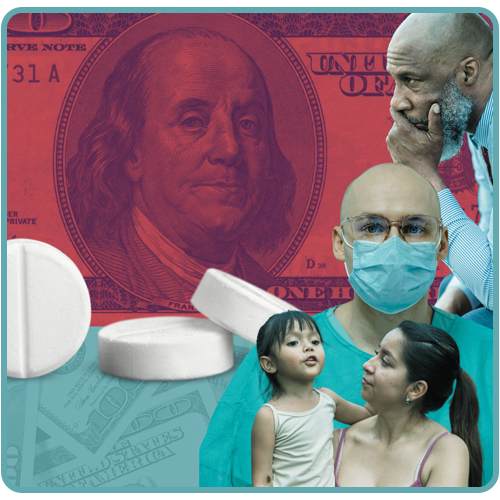 Hand it to Big Pharma. When you’ve lost the argument on every factual front, when the courts keep ruling against you, when nearly two dozen states have passed laws to stop your contract pharmacy restrictions, when 100 members of Congress have signed a letter to defund your favorite federal rebate scheme — you pivot to comedy.
In a recent TV ad that doubtlessly left most watchers bewildered, the industry accused the CEOs of safety-net hospitals of profiteering on the 340B Drug Discount Program.
That’s rich.
Steve Ubl, the CEO of PhRMA — the trade group that made the ad — took home $7.64 million in total compensation in 2024, according to the organization’s IRS filings. He’s a lobbyist. Actual pharmaceutical CEOs? Eli Lilly’s David Ricks earned $36.7 million in 2025 — a 26 percent raise from the year before. Johnson & Johnson’s Joaquin Duato: $32.8 million. Pfizer’s Albert Bourla: $27.6 million. Amgen’s Robert Bradway: $24.7 million.
These are the people running an industry that charged American patients 2.78 times more for prescription drugs than citizens in other developed countries. For brand-name drugs, the gap is even wider: 4.2 times higher than prices in comparable nations, according to a 2024 RAND Corporation study. When a European patient pays $100 for a medication, an American pays $422.
And when these same companies aren’t gouging Americans, they’re spending $10 billion annually on consumer advertising to tell you how much they care about patients. That’s roughly one of every four minutes of prime-time television. This is the industry pointing the finger at non-profit, safety-net hospitals. Forget policy arguments. This is a con.
The 340B program exists to help safety-net hospitals, rural health clinics, federally qualified health centers, Ryan White HIV clinics and children’s hospitals stretch scarce resources to serve the most vulnerable patients in America.
The 340B discounts that drug companies provide to these 2,700 hospitals represent just 3 percent of their global revenues. Only in Washington can the most profitable industry in the world make an ad about greed and keep a straight face.